Dental Crowns & Bridges 10 min read
A 98.6% survival rate over 14 years — emax veneers deliver, by clinical evidence, the most proven veneer results available today. Yet thousands of patients still ask the same question before booking their consultation: what are emax veneers, exactly, and are they right for me?
In this guide, you will learn what emax veneers are made of, how the procedure works step by step, how they compare to zirconia and composite alternatives, and why Antalya, Turkey has become the world's leading destination for high-quality emax veneer treatment at a fraction of Western prices.
In this guide you will discover:
- The material science behind emax veneers and why it matters
- The step-by-step treatment process and typical timeline
- A clear comparison: emax vs. zirconia vs. composite bonding
- Clinical survival data you can trust — sourced from PubMed studies
- Honest candidacy criteria (who benefits, and who should choose something else)
- Why Antalya delivers world-class results at up to 70% lower cost
What Are Emax Veneers?
Emax veneers are ultra-thin, custom-made ceramic shells that dentists bond to the front surface of your teeth to correct colour, shape, alignment, and size. The name derives from the IPS E.max system, developed by Swiss dental materials company Ivoclar Vivadent — widely regarded as the gold standard in modern cosmetic dentistry.
The material is lithium disilicate glass-ceramic (Li₂Si₂O₅). Dental laboratories press or mill this reinforced glass-based porcelain into shells that combine strength, translucency, and biocompatibility in one material. The flexural strength of emax ceramic reaches approximately 400 MPa — significantly higher than conventional feldspathic porcelain (60–70 MPa) — which makes each veneer highly resistant to chipping under normal daily use.
What makes emax veneers stand apart is their translucency. Natural tooth enamel is not opaque — it refracts light, giving teeth their characteristic glow. At just 0.3 mm thickness, emax veneers transmit light in a way that closely mimics enamel. The result looks virtually indistinguishable from natural teeth, even under close examination.
Emax veneers represent one of several dental veneer options available in Antalya — and for front-tooth aesthetic cases, experienced cosmetic dentists most frequently recommend this material above all others.
How Are Emax Veneers Made and Applied?
The treatment process typically unfolds over 5 to 7 days — which makes Antalya ideally suited to international patients who want to complete their smile transformation in a single trip. Here is what to expect at each stage.
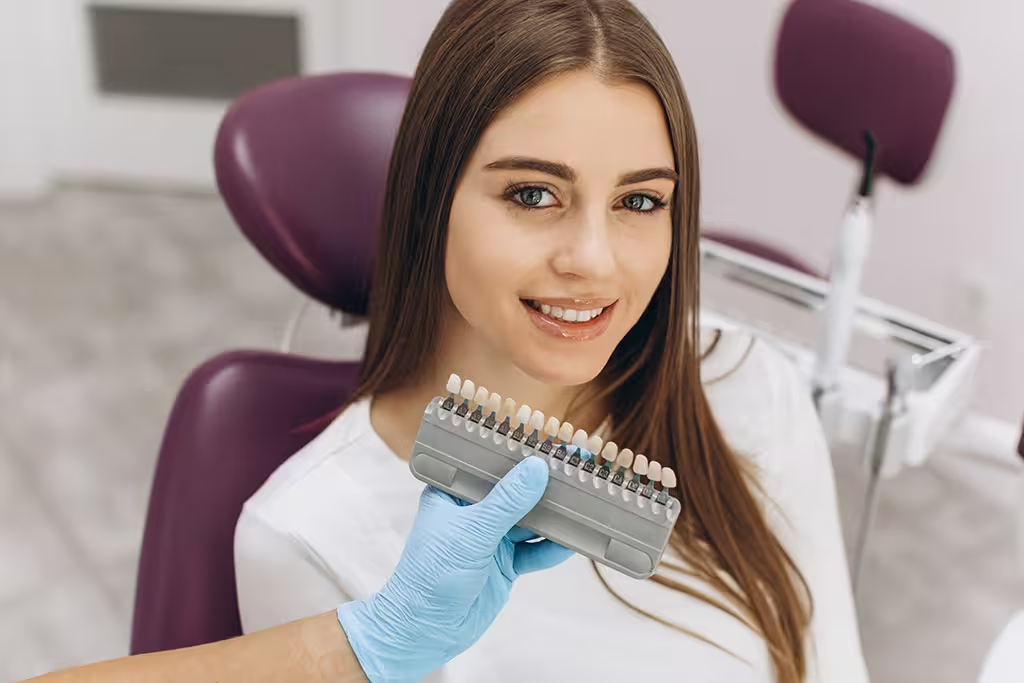
Step 1 — Consultation and Smile Design: Your dentist conducts a thorough assessment of your teeth, gums, and bite alignment. The team uses digital photographs, X-rays, and 3D scans to plan the exact shape, size, and shade of your emax veneers. You will discuss your aesthetic goals — whether that is a subtle refresh or a full Hollywood Smile transformation.
Step 2 — Tooth Preparation: Your dentist removes a thin layer of enamel — typically 0.3 to 0.5 mm — from the front surface of each tooth. This minimal reduction creates the bonding surface for the veneer. Local anaesthesia keeps the process entirely comfortable.
Step 3 — Impressions and Temporary Veneers: The clinic sends precise impressions (digital or traditional) of your prepared teeth to the dental laboratory. Your dentist fits temporary veneers to protect your teeth and let you preview the general look while the lab fabricates your permanent shells.
Step 4 — Laboratory Fabrication: Skilled dental technicians press or mill the lithium disilicate ceramic into the exact shape your smile design specifies. They then individually stain and glaze each veneer to match your chosen shade — a process that typically takes 2 to 3 working days in a high-standard Antalya lab.
Step 5 — Try-In and Bonding: On your final appointment, your dentist checks the fit, contact points, and shade before permanently bonding the emax veneers. The technician etches each veneer surface, applies a silane coupling agent, and bonds the veneer with dental adhesive resin. A curing light hardens the bond and your result is immediately visible.
To understand more about the differences between veneer types and preparation techniques, read our detailed explanation of laminate teeth veneers.
Emax Veneers vs. Zirconia vs. Composite: Which Is Right for You?
Choosing the right veneer material is a clinical decision that depends on your tooth condition, bite forces, and aesthetic goals. Below is an honest, data-based comparison.
| Feature | Emax Veneers | Zirconia Veneers | Composite Bonding |
|---|---|---|---|
| Material | Lithium disilicate ceramic | Zirconium dioxide | Resin composite |
| Thickness | 0.3–0.5 mm | 0.5–1.5 mm | 1–2 mm |
| Flexural Strength | ~400 MPa | 900–1,200 MPa | ~100 MPa |
| Translucency | Excellent (enamel-like) | Moderate | Moderate |
| Best For | Front teeth aesthetics | Bruxism, dark stains | Budget/temporary |
| Lifespan | 10–20 years | 15–25+ years | 5–8 years |
| Reversibility | Irreversible | Irreversible | Reversible |
Emax is the preferred choice when natural aesthetics drive the decision — specifically for the front 6 to 10 teeth where light transmission and colour matching matter most. The translucency of lithium disilicate creates a result that zirconia, despite its superior strength, simply cannot replicate.
Zirconia veneers suit patients who grind their teeth (bruxism), carry severely discoloured teeth that would show through translucent ceramic, or need back-tooth restorations that endure higher bite forces.
Composite bonding offers a reversible, lower-cost entry point — but it stains, chips more easily, and rarely lasts beyond 5–8 years. Patients seeking a long-term smile investment consistently find that emax veneers deliver far better value over time.
If you consider composite bonding as an alternative or complement to veneers, read our guide on composite bonding in Turkey.
The Clinical Evidence: How Long Do Emax Veneers Last?
Emax veneers rank among the most clinically documented restorations in modern dentistry. The peer-reviewed evidence is compelling.
A 2024 prospective study published on PubMed tracked pressed lithium disilicate restorations over 14 years and recorded a 98.6% survival rate — with an overall yearly failure rate of just 0.1%. A separate systematic review confirmed a 10-year estimated clinical survival rate of 98.3% for lithium disilicate veneers. These figures mean that with proper care, the vast majority of emax veneers placed today will still function and look excellent in 15 years.
Three factors maximise longevity above all others:
- Bonding to enamel (not dentin): ceramic veneers bonded to enamel show significantly higher survival rates than those bonded to exposed dentin
- Absence of bruxism: uncontrolled teeth grinding represents the single biggest risk factor for veneer fracture
- Regular professional maintenance: 6-monthly check-ups allow dentists to catch small issues before they escalate
Fracture is the primary failure mechanism for emax veneers — not debonding or discolouration. This underlines why good candidate selection matters: patients with uncontrolled grinding achieve better long-term results with zirconia alternatives.
For a deeper look at why emax veneers produce such impressive smile results, read our article on the benefits of E-Max veneers for smiles.
Who Is a Good Candidate for Emax Veneers?
Emax veneers solve a wide range of cosmetic concerns effectively — but they do not suit every patient. Here is how to assess your candidacy honestly.
You are likely an excellent candidate if you have: tooth discolouration that does not respond to whitening treatments; chips or minor fractures on the front teeth; gaps between teeth (diastema) you want to close; uneven or misshapen teeth you want to harmonise; mild crowding or alignment irregularities that do not require orthodontics; or healthy gums and no active decay.
You should consider an alternative if you have: severe bruxism (teeth grinding) — choose zirconia veneers instead, or address bruxism first; active gum disease or untreated decay — resolve these before any veneer treatment; insufficient enamel — a healthy enamel layer is essential for strong bonding; or severely misaligned teeth — orthodontic treatment such as clear aligners may be more appropriate.
If you are unsure whether you qualify, our FAQ page addresses the most common patient questions — or book a free consultation to receive a personalised assessment.
Emax Veneers in Antalya, Turkey: Cost, Quality, and Why Patients Choose Us
Antalya stands as one of Europe's most significant dental tourism destinations — and the statistics prove it. The city generates 500 million euros annually from dental health tourism, and international patient numbers grew by 30% in 2025 alone.
The cost difference: Emax veneers in Antalya cost between £200–£450 per tooth — compared to £950–£2,500 per tooth in the UK and $1,000–$2,500 in the United States. A full smile makeover involving 10–16 emax veneers costs up to 70% less in Antalya than the equivalent treatment in Western Europe, with the savings typically covering flights and accommodation.
The cost difference reflects structure, not quality. Lower cost of living in Turkey reduces overhead for labs, staff, and facilities — without any compromise on materials, technology, or clinical expertise. Antalya's leading clinics use the same IPS E.max ceramic system (Ivoclar Vivadent), the same digital scanning technology, and the same CAD/CAM milling equipment that clinics in London or Zurich rely on.
Safety, standards, and regulation: The Turkish Ministry of Health mandates licensing, professional registration, and quality compliance for all dental facilities in Turkey. Clinics that serve international patients must hold a Health Tourism Authorization Certificate — a credential that demands multilingual staff, international patient coordination, transparent pricing, and documented complication protocols.
Verify Turkey's official health tourism framework directly on the Turkish Ministry of Health Health Tourism Portal.
Turkey also holds more JCI-accredited hospitals than almost any other country outside the United States — a benchmark of international patient safety that leading dental clinic groups voluntarily adopt.
What to expect in Antalya: Day 1 — arrival, consultation, digital smile design, X-rays. Day 2 — tooth preparation, impressions, temporary emax veneers fitted. Days 3–4 — laboratory fabrication (patients explore Antalya). Days 5–6 — try-in, bonding, final adjustments. Day 7 — departure with your new smile.
View our full treatment prices or explore patient reviews from international patients who completed their emax veneer journey in Antalya. For broader context on dental tourism in Turkey, read our dental tourism Turkey guide.
How to Care for Your Emax Veneers After Treatment
Emax veneers are highly durable — but the right aftercare habits make the difference between a 10-year result and a 20-year one. Follow these four guidelines to protect your investment.
Daily oral hygiene: Brush twice daily using a soft-bristled toothbrush and a non-abrasive, fluoride toothpaste. Avoid whitening toothpastes — they can dull the glazed ceramic surface over time. Floss once daily, paying particular attention to the gum margins around each veneer.
Dietary habits: Avoid biting directly into very hard foods such as raw carrots, crusty bread, or ice. Emax veneers are highly durable, but extreme force on a single contact point can cause fracture — particularly at the incisal edge. Staining foods such as coffee, red wine, and turmeric do not penetrate the ceramic glaze, so moderate consumption causes no lasting discolouration.
Night guards for grinders: If you grind your teeth at night, wear a custom night guard. This single step protects your emax veneers more than any other aftercare measure. Your Antalya dentist can include a night guard as part of your treatment package.
Professional maintenance: Schedule a dental check-up every 6 months. Your dentist will assess the veneer margins, check for micro-fractures, and clean areas that daily brushing cannot reach. Any qualified dentist in your home country can carry out routine veneer monitoring after your Antalya treatment. If a veneer chips or debonds, contact your dentist promptly — minor chips often polish out, while larger issues may require rebonding or individual shell replacement.
For full information on smile makeover treatment and aftercare packages available at our clinic, visit our services page.
Conclusion
Emax veneers deliver the most clinically validated, aesthetically superior results in modern cosmetic dentistry. Made from lithium disilicate glass-ceramic, they offer enamel-like translucency, a 98.6% survival rate at 14 years, and a realistic lifespan of 15–20 years with proper care.
They suit patients who seek front-tooth aesthetic improvement — correcting discolouration, chips, gaps, or uneven shapes — and who come with healthy gums, sufficient enamel, and no uncontrolled bruxism.
Antalya, Turkey gives you an exceptional opportunity to receive emax veneer treatment to the same international standard as leading UK or European clinics — at 60–70% lower cost, in a city that welcomes over 500,000 international dental patients annually, under the direct regulatory oversight of the Turkish Ministry of Health.
If you are ready to explore whether emax veneers are right for you, the next step is a personalised assessment. Contact Antalya Dental Clinic Turkey today to book your free consultation — and take the first step towards the smile you deserve.
Frequently Asked Questions
Are emax veneers the same as porcelain veneers?
Yes. Emax veneers are a type of porcelain veneer — specifically, one made from lithium disilicate glass-ceramic, a high-strength, highly translucent dental ceramic that closely mimics natural enamel.
Do emax veneers stain over time?
No. The glazed ceramic surface of emax veneers resists staining effectively. Unlike natural teeth, emax veneers do not absorb pigment from coffee, tea, or red wine — your shade stays consistent for years.
Is the emax veneer procedure painful?
Dentists perform emax veneer treatment under local anaesthesia, so you feel no pain during the appointment. Some patients notice mild sensitivity for a few days after preparation, which resolves quickly.
Can I complete emax veneers in one trip to Antalya?
Yes. Most patients complete their full emax veneer treatment in a single visit of 5 to 7 days — consultation, preparation, and bonding all within one trip to Antalya.
How many teeth can dentists treat with emax veneers at once?
There is no fixed limit. Most smile makeover patients treat between 8 and 20 teeth in a single treatment plan, depending on their smile design goals.