Dental Implants 5 min read
All on 4 is a full-arch dental implant option. Four implants work together to support a strong, stable base. This base holds a fixed, non-removable bridge. Typically, two implants are placed in the front. The two back implants are often set at an angle. This helps maximize support and use the available bone better. This approach can help many patients avoid complex bone grafting, reduce total treatment time, and improve predictability. However, candidacy depends on detailed 3D imaging, careful treatment planning, and a thorough clinical assessment by the dental team.
This is not a “quick cosmetic upgrade.” It is a structured clinical program designed to deliver a stable bite, functional chewing, and a natural smile line.
Who Is a Good Candidate?
All on 4 dental implants Turkey is commonly considered for patients who meet one or more of these profiles:
- Extensive tooth loss (upper, lower, or both arches)
- Failing teeth with poor long-term prognosis
- Loose or uncomfortable dentures with reduced stability and confidence
- Preference for a fixed solution rather than removable prosthetics
Governance checks that matter
A predictable plan requires a controlled risk profile. Clinical teams typically evaluate:
- Gum health: Active infection must be stabilised before implant rehabilitation
- Bone level and anatomy: Confirmed via 3D imaging for safe planning
- Systemic factors: Uncontrolled diabetes and similar conditions can affect healing
- Smoking: Smoking increases complication risk and may reduce integration success
- Bruxism: Grinding/clenching can overload restorations without protection planning
Suitability is confirmed only after clinical examination and diagnostics.
Step-by-Step: All on 4 Treatment Pathway
1) Consultation, diagnostics, and case qualification
A decision-grade plan starts with diagnostics. The priority is to map bone volume, bone density, bite relationship, and anatomical constraints. 3D imaging (CBCT) is commonly used to create a precise blueprint.
2) Digital planning and smile design alignment
Implant placement must match the final restoration plan. The objective is to align implant positions with the future bite, smile line, and functional load paths. This step reduces preventable complications and improves predictability.
3) Surgery day: extractions (if required) + implant placement
Where failing teeth exist, extraction may be performed as part of the same appointment. Implants are placed according to the digital plan, following sterile surgical protocol and stability requirements.
4) Same-day temporary fixed teeth (case-dependent)
A fixed temporary bridge may be fitted the same day. This is commonly called “teeth same day” or “teeth in a day”. It is case-dependent and tied to primary stability, bone quality, and bite risk.
5) Healing and osseointegration phase
Dental implants need time to properly fuse and stabilize with the jawbone through a process called integration. While you heal, a temporary bridge helps keep your smile looking natural. It also supports daily tasks like speaking and chewing. Just as importantly, it protects the surgical areas while you follow diet guidelines and careful oral hygiene. This helps reduce irritation and supports a smoother recovery.
6) Final bridge delivery
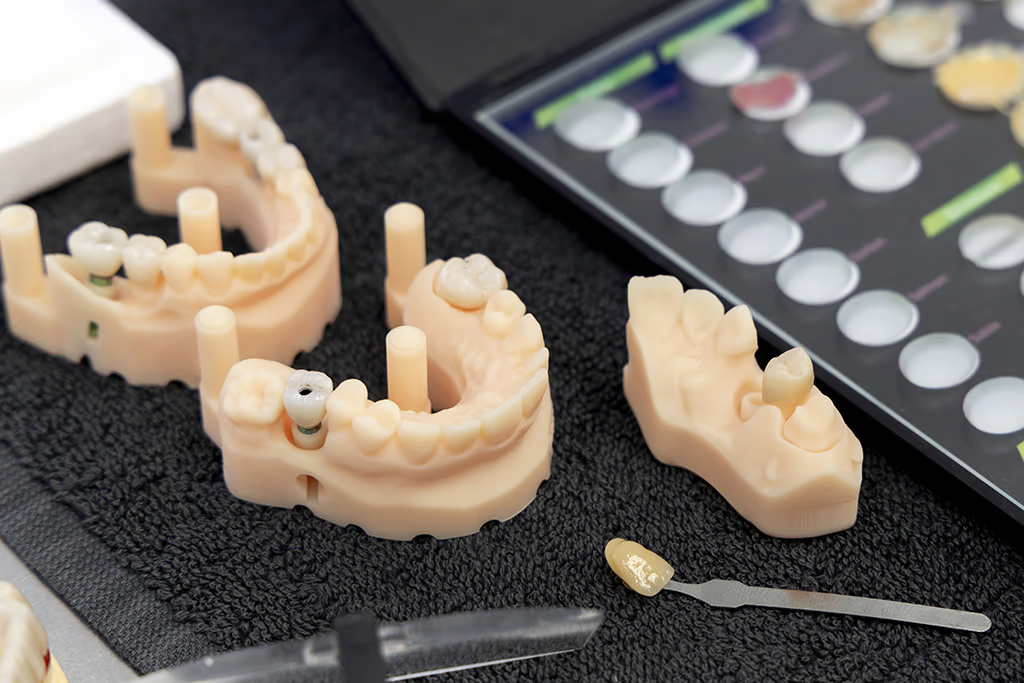
After integration is confirmed, the final restoration is designed and delivered. Material selection (zirconia-based solutions, hybrid designs, etc.) is chosen based on bite forces, aesthetics, and maintenance strategy.
Teeth Same Day Turkey: When Immediate Loading Is Approved
The “same-day teeth” pathway is a clinical decision, not a blanket guarantee. Immediate loading is typically approved when:
- Primary implant stability meets required thresholds
- Bone quality supports predictable early function
- Bite forces can be controlled (occlusion governance)
- Patient risk factors are acceptable (smoking, systemic control, hygiene readiness)
When immediate loading is not recommended, a staged plan protects safety and long-term success.
Recovery Timeline: What Patients Should Expect
Every patient heals differently, but a corporate-standard recovery roadmap typically looks like this:
First 72 hours
Swelling, mild bruising, and discomfort are common. Medication and cold compress guidance are provided. Rest and hydration support early healing.
Week 1–2
Soft diet remains essential. Hygiene routines shift to gentle, controlled cleaning. Follow-up reviews confirm tissue response.
Month 1–3
Function stabilises. The temporary bridge remains under controlled loading. The focus is consistent hygiene and scheduled reviews.
Month 3–6 (typical integration window)
Osseointegration matures. The clinical team validates readiness for final restoration.
If swelling increases after the early phase, fever occurs, or numbness persists, clinical review should be requested immediately.
Risks and Safety Controls (Transparent Governance)
All on 4 is well-established, but it remains surgical care with known risks. Key categories include:
- Infection and delayed healing
- Nerve-related symptoms (pain, tingling, numbness)
- Sinus-related complications for upper jaw cases
- Failure to integrate (implant failure)
- Mechanical complications (screw loosening, chipping, wear)
- Peri-implant disease risk without maintenance discipline
Risk reduction typically includes: 3D planning, sterile protocol, stability-led loading strategy, bite calibration, and structured follow-up.
All on 4 vs Dentures vs Conventional Implants (Decision Matrix)
All on 4
- Fixed teeth supported by four implants
- Efficient full-arch solution with strategic positioning
- Same-day temporary teeth possible for suitable cases
- Requires maintenance discipline and review cadence
Traditional dentures
- Lower entry cost
- Removable and can shift during chewing or speech
- Bone resorption progression may continue over time
- May require relines and replacements
Conventional full-arch implants (often 6–8 implants)
- Fixed solution with high stability potential
- Can demand more bone and may increase grafting probability
- Higher surgical scope and often higher cost
The correct option is selected by diagnosis, anatomy, risk profile, and lifestyle requirements.
All on 4 Dental Implants Cost Turkey: What Drives Pricing
Pricing is case-specific. A credible plan clarifies what is included and what drives cost:
- Single arch vs full mouth scope
- Extractions, infection management, and pre-surgical stabilisation
- Bone conditions and any adjunct procedures
- Temporary bridge design and final bridge material selection
- Lab scope and quality control processes
- Follow-up visits and aftercare framework
A serious provider offers a transparent package outline so financial planning matches clinical reality.
Travel Pathway: How International Patients Typically Schedule Treatment
All on 4 often follows a structured travel cadence:
- Visit 1: Diagnostics confirmation + surgery + temporary fixed bridge (if clinically approved)
- Visit 2: Final bridge delivery after integration window
Timing varies by healing response and plan complexity. A clinic that serves international patients should use a clear and reliable scheduling system. This helps protect patient safety. It also supports good clinical outcomes. Instead of compressing the timeline to maximize speed, it should allow time for evaluation and treatment. It should also include recovery and follow-up to support consistently high-quality results.
Aftercare and Long-Term Maintenance: Non-Negotiables
Long-term stability is operationally managed by routine, not luck. Best-practice maintenance typically includes:
- Twice-daily brushing with correct technique
- Bridge-under cleaning tools and/or water flosser usage
- Professional hygiene visits and structured reviews
- Bite monitoring, night guard planning when indicated (bruxism risk)
- Immediate reporting of looseness, pain, or gum bleeding escalation
Implants and bridges are durable, but the supporting tissues require consistent management.